Digital discipleship
A Monday-through-Saturday faith.
The sermon ends around noon on Sunday. You poured everything into those forty minutes... the prayer, the study, the Saturday night where you rewrote the ending twice. Then noon hits, you shake hands at the door, and the building empties out.
The next time most of your church hears from you is 167 hours later.
Sit with that number for a second. 167 hours. And in that gap, their phones will speak to them roughly two thousand times. Instagram doesn't take Tuesday off. Neither does ESPN, or the news app, or the group chat that never sleeps. Somebody is discipling your people between Sundays... it's just probably not you. (And no, I'm not anti-phone. The phone is the mission field. That's a different post.)
Let me call myself out before I call out anybody else. I spent 25 years in church production making Sunday bigger. Better lights, cleaner mix, one more camera. I confess I measured my entire ministry in forty-minute blocks, and I never once asked what Wednesday looked like for the single mom in row twelve. Nobody on my team asked either. Especially not me.
Pastor, I'm not writing that to shame you. I'm writing it because I lived it. We don't have a preaching problem in the American church... we have a Tuesday problem.
Is the sermon a seed... or the whole meal?
Forty minutes on Sunday was never designed to carry a whole week of formation. It can't. And that's not a critique of your preaching... it's just math. The sermon plants something. The week is supposed to water it.
But in most churches, the watering is left to chance. Maybe they remember the main point? Maybe the small group stumbles onto a study that sort of fits? Maybe the parents figure out what to say in the car on the way home? That's a lot of maybes carrying the weight of somebody's spiritual formation. I confess I ran ministries on maybes for years... and maybes don't make disciples.
I can already hear the pushback. "Jeff, the Holy Spirit doesn't need a content calendar." Amen. He doesn't. But the same pastor who tells me that also builds a preaching calendar, a worship set, and a follow-up process... because planning and faithfulness were never enemies. James said be doers of the word, not hearers only. Doing takes a Tuesday.
A Monday-through-Saturday faith doesn't happen by accident.
It happens when the sermon refuses to stay in the building. When Sunday keeps showing up... Monday morning, Wednesday night, Saturday before bed... in the pockets of the people you already pastor.
So what actually carries Sunday into the week?
Three things. Not three products... three surfaces of the same sermon.
The first is a daily devotional... yours, not a generic plan. Eight minutes each morning: Scripture, a short devotional written from Sunday's message in your communicator's voice, a question to sit with, a prayer to pray. Six mornings, one thread, and Saturday's entry deliberately turns the heart toward the next Sunday. That's the whole job of a devotional... it takes the sermon beyond Sunday and challenges people toward a Monday-through-Saturday faith, not a one-hour-a-week one.
And it's walked in small circles of real people, not scrolled alone. People who can see each other show up, and tap "I prayed for you" when a request lands. Your dashboard will want to talk about opens and streaks... and analytics lie. The win is smaller and better than a streak: two people in your church praying for each other on a Thursday morning who weren't doing that last month. Community, not a content feed.
The second is the small group Bible study. Your groups meet during the week... Tuesday in a living room, Thursday over video... and when they do, the study is already written. From Sunday's sermon. In every language your groups meet in. The leader who used to stay up late piecing questions together now opens a page and leads, and the whole church discusses the same word it heard together. One pulpit, many tables.
The third is the family layer, and honestly, this is the one that gets me. Kids get the same story all week. Parents get the memory verse, three questions for the car ride, and a family-night activity... the whole week handed to them, without a leader stressing. Because faith formation that only happens in a building doesn't survive the drive home. Deuteronomy 6 put discipleship in the house and on the road long before we put it in a classroom.
Why does one source matter so much?
You could build all of this from parts. A devotional app from one vendor, a curriculum subscription from another, a kids program from a third. Plenty of churches do, and I'm not throwing rocks at any of those companies... we're not in competition with other churches or the people who serve them. We're in competition with the world's solutions for your people's attention. Netflix has a formation plan for your congregation this week. Do you?
But watch what happens with three vendors: your church spends the week in three different conversations. The adults are reading one thing, the groups are studying another, the kids are learning a third... and none of it touches what was actually preached on Sunday.
When everything flows from the one sermon, the week grows a spine. What was preached Sunday is what's prayed Tuesday morning, discussed Wednesday night, and asked about in the minivan on Friday. Same passage. Same voice. Same next step.
Coherence, more than any feature, is what forms people.
If you want the whole thing written out, we published the method free: the adult week, the kids week, and the youth week... including an honest count of what it costs a church to run by hand.
This is Grow, the third movement of Multiply. And it's not a theory... it runs every single week, in English and Spanish, inside Christchurch Miami's app. No new hires. No exhausted volunteers. One sermon, preached once, doing six more days of work.
So, Pastor... one honest question. If I texted ten people in your church on a Tuesday and asked what Sunday's sermon was about, what would they say? If that question stings, good. It stung me first. What's your plan for the other 167 hours? I'd genuinely love to hear it.
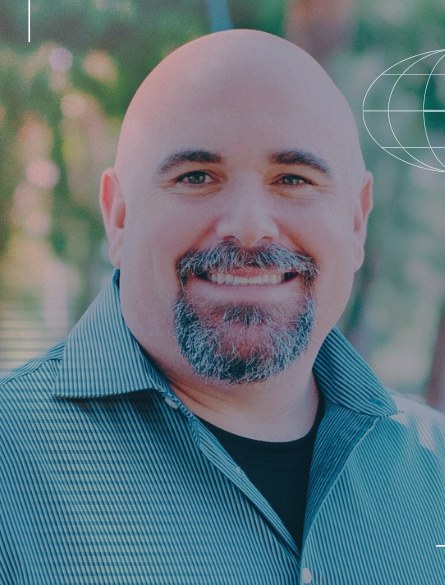
Founder of Humble Disruption and theChurch.digital. 25 years in church production, communications, and digital — and the builder behind Multiply. More about Jeff →