Church SEO
How people actually find churches in 2026.
It's funny... ask a pastor how people find their church, and you'll get the same answer almost every time. Word of mouth. Somebody invites somebody. And that answer is true. I've given it myself for years... from the stage, in the lobby, in more strategy meetings than I care to admit.
It's also incomplete.
Because before most people trust an invitation, they check. They pull out the phone. They skim your website, watch thirty seconds of a sermon, scan the photos to see if anybody looks like them. The friend opened the door... the search decided whether they walked through it. And a growing number of guests never got an invitation at all. Nobody brought them. They typed a question into a search bar at 1am, something answered, and on Sunday they showed up in your lobby like they teleported there.
Search. Seat. Savior. Surrender. That's the journey we're praying people take... and whether we like it or not, in 2026 it starts at search.
What is your city actually typing?
There are two kinds of searches, and most churches only know about one of them.
The first is the directory search: "church near me." "Bilingual church Miami." "Iglesia cerca de mí." Map-driven, local, high intent... this person has already decided to find a church and is choosing which one. You need to show up here, absolutely. Accurate profile, consistent details, a site that loads fast on a phone. Table stakes. Most churches stop here, and honestly, most church SEO advice stops here too... claim your profile, list your service times, done.
The second is the question search. Why does God allow suffering? How do I forgive someone who isn't sorry? Is depression a sin? Read those again, slower... those are prayers. Typed into a search bar. At 1am.
And this is the part that got under my skin: the question searches dwarf the directory searches in volume, and churches are almost entirely absent from them. Your city is asking. Something is answering. A podcast is answering. A forum is answering. An influencer with a ring light is answering. It's just usually not the Church.
Let me say it this way. Nobody is fighting the church down the street for "church near me"... that was never the competition. We're competing with the world's answers for "why does God allow suffering." And right now, Pastor, the world is winning that search by forfeit.
This is also the layer AI search reads. When someone asks ChatGPT or Google's AI a question about faith, the answer gets stitched together from pages exactly like these. If your church has none... you're not in the answer. You're not even in the room.
So what does Google actually reward?
Confession first: for years I thought the answer was a prettier website. I've burned real budgets on redesigns... new fonts, new photography, a homepage video almost nobody watched past the first few seconds. (I watched it a lot. I made it.) If I'm honest, it was borderline embarrassing how little any of it moved.
So we ran a test. We re-scored the live websites of six Miami churches... megachurches, multisite networks, denominational congregations, and one church of two hundred... across eight dimensions. And let me be clear before anybody gets nervous: this is not about beating the church down the street. I'm cheering for every one of those churches. The scorecard doesn't measure faithfulness. It measures what the machines can see.
The 200-seat church won the scorecard outright.
Not with a bigger budget. With substance:
Depth: one sermon becomes seventeen live pages a week... transcript, devotionals, group study, two blog voices... in English and Spanish. Over a thousand indexable pages, and every single one is a door somebody can walk through.
Structure: clean headings, real page hierarchy... while some of the largest sites in the city render no H1 at all.
Machine-readability: eighteen types of structured data on the homepage. Several of the biggest churches ship exactly zero.
Speed: a 73 KB homepage next to peers shipping over 1.5 MB. Fast pages rank. Heavy pages drown.
Zero. Sit with that number for a second... some of the most resourced churches in America are handing the machines exactly zero information about who they are. Beautiful buildings. Beautiful websites. Invisible churches.
Can a church of two hundred really win this?
I know what you're thinking, Pastor. "Sure, that works for somebody with a comms team. My whole team is me, a part-time worship leader, and a volunteer named Linda." A church our size can't compete in search. Yes, it can. Let me show you why.
Search doesn't rank sanctuaries. It ranks answers. And a church of two hundred with a weekly sermon is sitting on more raw material than most media companies: fifty-two messages a year, every single one loaded with the exact questions your city is typing. Grief. Marriage. Anxiety. Purpose. You already answered them... last Sunday. And the Sunday before that. You've been answering them for years... the answers just never left the room.
The megachurch advantages... budget, staff, brand... barely register in an index that rewards depth, structure, and consistency. As far as I can tell, this is the one arena in ministry where faithfulness out-scales size.
And can I be honest about the metrics while we're here? Don't chase the traffic chart. Analytics lie... a "view" is three seconds of somebody scrolling past. The win I care about isn't ten thousand impressions. It's one mom in your zip code finding your sermon on grief at midnight, reading the whole thing, and sitting in a seat on Sunday. That's the win. That's the whole point of showing up in search at all.
Will it happen automatically? No. Does the sermon have to become actual pages... structured, fast, machine-readable pages? Yes. But you don't need a bigger stage, and you don't need a bigger staff. Matthew 28 says go... and in 2026, "go" includes the search bar. You need what you already preach, multiplied.
This is Find, the first movement of Multiply: see exactly what one sermon becomes, page by page. Then ask the harder question... last night, when somebody in your city typed their 1am question, did anything your church has ever preached answer them? What's the plan, Pastor? I genuinely want to hear it.
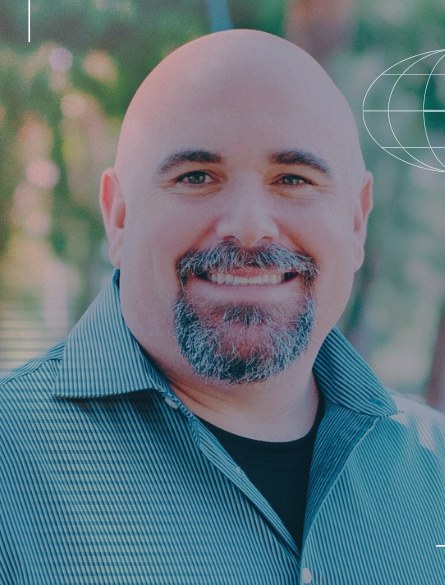
Founder of Humble Disruption and theChurch.digital. 25 years in church production, communications, and digital — and the builder behind Multiply. More about Jeff →