Digital discipleship
Is AI-powered ministry soulless?
A pastor asked me the question again a couple weeks ago. We had just walked through the whole system... one sermon becoming transcript pages, devotionals, study questions, a week of discipleship... and he leaned back, crossed his arms, and said it. "Jeff, I don't know. Doesn't this feel a little... soulless?"
I get it. I hear you. And I want you to notice I'm not offended by the question, because it's the right question. Honestly, if a pastor didn't ask it, I'd worry about the pastor.
So let me answer it straight... because I've had to answer it for myself first.
Confession time. I use AI tooling every single week. The content system we run for Christchurch Miami has AI right in the middle of it. And when we started, I wrestled hard with this exact fear. There were nights I'd read a machine-drafted devotional built from Sunday's sermon and just sit there thinking... is this ministry, or is this manufacturing? I've baptized shortcuts before in 25 years of church production and called them faithfulness. I wasn't eager to do it again.
So instead of arguing with the fear, I sat with it long enough to find what was underneath. And underneath it was an assumption... a big one... that almost everyone in this conversation is making without noticing.
What are we actually afraid of?
When you hear "AI church content," what's the picture? A robot in the pulpit? An algorithm feeding your congregation whatever keeps them scrolling? Words about God that no human being ever prayed over? A church that runs itself while the shepherd... what, exactly... naps?
Every one of those pictures assumes the same thing: that the soul of ministry lives in the production of words. That when the typing gets outsourced, the soul goes with it.
Pastor, the soul was never in the typing.
Think about the last person your church actually discipled. Not reached... discipled. Did that happen because somebody typed a really good paragraph? Or did it happen because a person sat across from a person, week after week, and prayed, and asked the second question, and showed up at the hospital? The words mattered. The words were never the soul.
So what is the AI actually doing?
Let me say it this way. AI in ministry is a traffic cop, not a discipler.
A traffic cop stands in the intersection and directs. This way. Not that way. Keep moving. Genuinely useful... on a chaotic corner he might be the most useful person on the street. But no traffic cop has ever climbed into your car and ridden home with you. Directing isn't accompanying. It never was.
That's the entire job of AI-assisted content. The sermon transcript that answers somebody's two-in-the-morning search is directing a searcher toward a seat. The devotional is directing a believer toward a Monday-through-Saturday faith... and back toward the room on Sunday. The study questions are directing a group of people toward each other. Every piece points the same direction: toward people. Because AI never disciples anyone... people disciple people.
And two rules keep the cop honest. First, the source is the pastor. The system doesn't generate ministry out of thin air... it multiplies what you already preached, so your voice stays the source. Second, the human-review rule: every AI-assisted word gets human eyes before it reaches a congregation. Every single one. The day a church skips that step, I'll stand with the critics.
Picture the week, Pastor. You preach Sunday. By Tuesday, that sermon is a transcript page your city can actually find, a devotional in somebody's inbox before work, and three questions a small group Bible study will wrestle with on Thursday night. You wrote none of it from scratch... and you preached all of it. That's the multiplication: one sermon becomes a week of discipleship, and nobody added an hour to anybody's plate. The machine didn't create ministry. It carried your ministry into the corners of the week where your people actually live... and pointed every corner back at the room.
Where does the soul actually live, then?
In the rooms. In the small circles where somebody notices you didn't show up this week and texts you before lunch. In the two guys who've prayed together every Thursday for a year. In the seat next to another human being on a Sunday. Content is one-way communication... and content without community is meaningless. A feed can't sit with you in a waiting room. A beautifully written devotional will never hug your kid at her baptism.
Digital complements the physical. It never replaces it. If somebody's selling your church content instead of community, they're selling the hollow thing you're afraid of... and the fear is right about that thing. Aim it there.
"But Jeff, won't my people feel it? Won't Tuesday's devotional smell like a machine?" Fair... so smell the actual thing. Tuesday's devotional came out of Sunday's sermon. Your passage. Your phrasing. Your dad joke from the second service, if we're being honest. Reviewed by human eyes before anyone saw it. By my own unscientific count, a few dozen pastors have sat across from me this year, and the "soulless" worry showed up in the first ten minutes almost every time. You know what I haven't heard once? A congregation complaining that their pastor's words kept showing up midweek.
Meanwhile... and this is the part that actually keeps me up... the world's answer machines run all night with no theology, no review, and nobody losing sleep over souls. Somebody in your city asked a chatbot about God this week. That's the competition. Never the church down the street... always the world's answers, arriving instantly, discipling no one, pointing nowhere. The question was never whether AI gets near ministry. It's already near. The question is whether anyone with a shepherd's heart is standing in the intersection.
The Church has flinched at every new tool, by the way. The printing press. Radio. The internet. Each time, the fear underneath was the same one: will the machine replace the shepherd? It never has. The shepherds who refused the tools just reached fewer sheep. Matthew 28:19-20 says go and make disciples... it never says go and generate content. But it never says stay small on principle, either. The command is disciples. Tools that route more people toward the disciple-makers are worth redeeming.
At Christchurch Miami, this doesn't stay theoretical. People who started as a search result... found a transcript, read quietly for a month, finally took a seat... now serve in ministry. The content directed. The church discipled. When I spot one of them in a parking-lot vest on a Sunday morning, I never think "the machine did that." Nobody thinks that. The machine held the intersection. The people were the ministry.
That's what Multiply is built to be for your church. Not a content factory with your logo on it... a week-long traffic cop for the sermon you already preached. You preach; the system multiplies it into the pages your city finds and the daily rhythm that walks people toward your rooms... all without a leader stressing, and never a word unreviewed.
So, Pastor, here's my challenge for the week. Trace your church's content... every post, every clip, every email... and ask one question of each piece: does this point to more content, or does it point to people? If the honest answer is mostly content, you don't have an AI problem. You have a direction problem... and that one's very fixable. And if you still think the traffic cop is soulless, tell me why. I answer my own email, and I'd genuinely love the argument. What do you think?
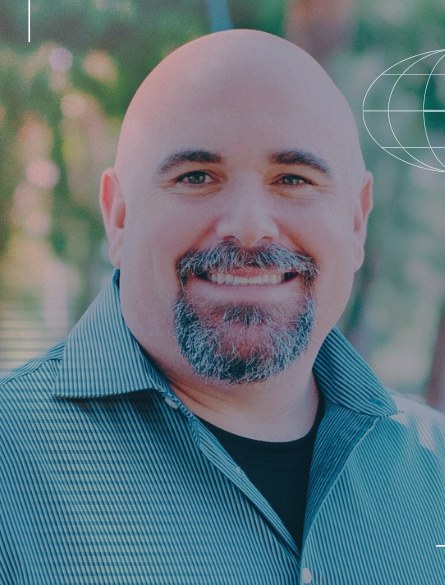
Founder of Humble Disruption and theChurch.digital. 25 years in church production, communications, and digital — and the builder behind Multiply. More about Jeff →